Buttery Croissant Recipes At Home
Highlighted under: Baked Wonders
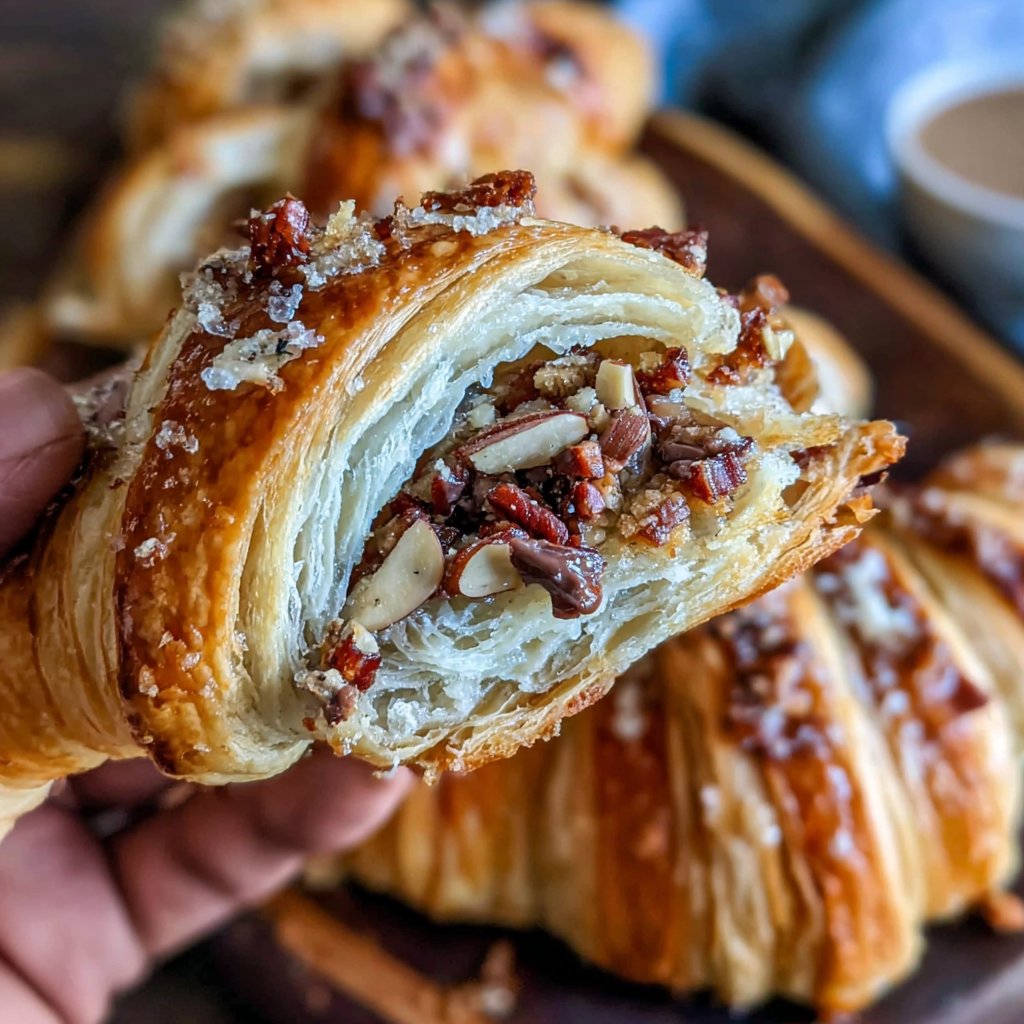
I absolutely love baking buttery croissants at home, and I believe everyone should try it! The aroma that fills the kitchen while these pastries are baking is simply irresistible. I've spent countless weekends perfecting this recipe to achieve a flaky and golden result that melts in your mouth. With simple techniques like lamination and allowing the dough to rest, I've learned how to achieve that perfect texture that makes a croissant truly special. Trust me, once you try making these at home, you'll never want to settle for store-bought again!

Baking these croissants has been a delightful journey for me. I remember the first time I tried making them; the dough seemed daunting, yet with each fold and roll, I grew more confident. It’s all about mastering the lamination process, which helps create those beautiful layers that define a croissant. Allowing the dough to rest properly is key—patience really pays off!
One specific tip I learned through trial and error is to ensure your butter is at the right temperature. It should be cold yet pliable; this allows for optimal layering without melting into the dough. The right temperature makes all the difference in achieving that flaky, buttery exterior.
Why You'll Love This Recipe
- With each bite, you'll experience a perfect balance of flaky and buttery goodness.
- The process is incredibly rewarding, and you'll impress family and friends.
- Customization options are endless—add chocolate, almond paste, or enjoy them plain.
Mastering the Art of Lamination
The lamination process is crucial for achieving those signature flaky layers in croissants. After you pound the cold butter into a rectangle, it should be firm but pliable. When incorporating it into the dough, make sure the edges are sealed well to keep any butter from leaking out. If you notice the butter becoming too soft during this process, pop the dough back in the fridge for a few minutes to chill it again, ensuring that the temperature remains cool throughout.
Folding the dough is not only about creating layers but also about developing gluten. Each fold should be done gently enough to retain the air pockets formed by the butter. After the final fold, you can wrap the dough and chill it overnight for an even better flavor and texture the next day. This process allows for the butter to hydrate the dough fully, leading to a more pronounced buttery flavor when baked.
Perfecting Your Croissant Shape
Shaping your croissants can influence the finished product's aesthetics and texture. When rolling each triangle, be sure to give it a tight roll, especially at the wide end, to avoid air gaps that can lead to uneven baking. If you're unsure about your technique, practice with scrap dough first to get a feel for how tight to roll. Aim for a neat, spiral shape, which will help the pastry rise beautifully in the oven.
Another tip is to let the shaped croissants rest under a damp cloth as they rise. This prevents them from drying out and helps maintain the moisture needed for that perfect golden crust. When placing them on the baking sheet, leave enough space between each croissant to allow for adequate spreading; this typically means about 2 inches apart, ensuring they have room to puff up when baking.
Storage and Variations
If you find yourself with leftover croissants, you can store them in an airtight container at room temperature for about 2 days. For longer storage, wrap them individually in plastic wrap and place them in a freezer bag. Frozen croissants can last up to a month. To reheat, simply bake them at 350°F for 10 minutes until warmed through and crispy again. This method helps revive their flaky texture, making them enjoyable even after freezing.
For a delightful variation, consider adding fillings before rolling. Chocolate chips or almond paste are fantastic options that introduce an exciting flavor twist. Just be cautious not to overfill, as this can lead to messy croissants during baking. Always seal the edges thoroughly to prevent any leakage, ensuring your buttery creation remains intact and delicious.
Ingredients for Buttery Croissants
For the Croissant Dough:
- 4 cups all-purpose flour
- 1/4 cup granulated sugar
- 2 teaspoons salt
- 1 tablespoon instant yeast
- 1 1/2 cups unsalted butter (cold)
- 1 1/4 cups milk (warm, about 110°F)
- 1 egg (for egg wash)
Make sure all your ingredients are at the correct temperature for the best results.
Preparation Steps
Prepare the Dough
In a large mixing bowl, combine flour, sugar, salt, and yeast. Gradually add warm milk and mix until a dough forms. Knead for about 5 minutes until smooth. Cover and let it rest for 1 hour.
Laminate the Butter
While the dough is resting, place the cold butter between two sheets of parchment paper and pound it gently with a rolling pin to form a flat rectangle. Chill in the refrigerator.
Incorporate Butter
Roll out the rested dough into a rectangle and place the chilled butter in the center. Fold the dough over the butter, sealing the edges. Roll out again to a large rectangle.
Fold and Chill
Perform a series of folds (about 3) to create layers, chilling the dough for 30 minutes between each fold. This process takes time but is essential for flakiness.
Shape the Croissants
Once the dough is ready, roll out to a large rectangle, cut triangles, and roll each triangle tightly from the wide end to the tip. Place on a baking sheet.
Final Rise and Bake
Let the croissants rise for 2 hours until doubled in size. Preheat the oven to 400°F and brush with egg wash. Bake for 20 minutes until golden brown.
Allow the croissants to cool slightly before serving for the best texture.
Pro Tips
- For the best results, use high-quality butter and allow plenty of time for resting the dough between folds. Experiment with different fillings to personalize your croissants!
Ingredient Roles
Understanding the role of each ingredient in this croissant recipe is vital for success. All-purpose flour provides the necessary gluten structure, while the cold unsalted butter creates layers and adds richness. Granulated sugar not only enhances the flavor but also helps achieve a golden color during baking. The instant yeast is essential for the dough's rise, resulting in a light and airy pastry.
Using warm milk is another crucial step, as it activates the yeast while also providing hydration. Be careful not to overheat the milk; it should be around 110°F, as temperatures much higher can kill the yeast, leading to dense croissants. If you prefer dairy-free options, almond milk or oat milk can work well, but ensure they're warmed before adding to the dry ingredients.
Troubleshooting Common Issues
If your croissants turn out too dense, it may be a sign that the dough was over-kneaded or not allowed to rise adequately. The dough should be soft and slightly tacky to touch, and it should roughly double in size during rising. If they spread too much while baking, make sure to refrigerate after shaping to firm up the butter before baking, as this helps retain structure.
On the other hand, if the croissants are not browning properly, your oven temperature might be too low. Ensure it’s preheated to 400°F, and consider using an oven thermometer to confirm accuracy. For an extra-crisp exterior, placing a baking stone or tray in the oven while it preheats can help create a more stable thermal environment, allowing for a better rise and an attractive finish.
Questions About Recipes
→ Can I freeze the dough for later use?
Yes, you can freeze the dough after laminating. Just wrap it tightly and store it in the freezer for up to 2 months.
→ What if my croissants don't rise?
Ensure your yeast is fresh and check the temperature of your environment; the dough needs a warm, draft-free location to rise properly.
→ Can I make croissants without butter?
Butter is essential for croissant flavor and texture. However, you could experiment with vegan alternatives if desired.
→ How can I tell when my croissants are done baking?
Croissants should be a deep golden brown and sound hollow when tapped on the bottom.
Buttery Croissant Recipes At Home
Created by: Natalie Warren
Recipe Type: Baked Wonders
Skill Level: Intermediate
Final Quantity: 12 croissants
What You'll Need
For the Croissant Dough:
- 4 cups all-purpose flour
- 1/4 cup granulated sugar
- 2 teaspoons salt
- 1 tablespoon instant yeast
- 1 1/2 cups unsalted butter (cold)
- 1 1/4 cups milk (warm, about 110°F)
- 1 egg (for egg wash)
How-To Steps
In a large mixing bowl, combine flour, sugar, salt, and yeast. Gradually add warm milk and mix until a dough forms. Knead for about 5 minutes until smooth. Cover and let it rest for 1 hour.
While the dough is resting, place the cold butter between two sheets of parchment paper and pound it gently with a rolling pin to form a flat rectangle. Chill in the refrigerator.
Roll out the rested dough into a rectangle and place the chilled butter in the center. Fold the dough over the butter, sealing the edges. Roll out again to a large rectangle.
Perform a series of folds (about 3) to create layers, chilling the dough for 30 minutes between each fold. This process takes time but is essential for flakiness.
Once the dough is ready, roll out to a large rectangle, cut triangles, and roll each triangle tightly from the wide end to the tip. Place on a baking sheet.
Let the croissants rise for 2 hours until doubled in size. Preheat the oven to 400°F and brush with egg wash. Bake for 20 minutes until golden brown.
Extra Tips
- For the best results, use high-quality butter and allow plenty of time for resting the dough between folds. Experiment with different fillings to personalize your croissants!
Nutritional Breakdown (Per Serving)
- Calories: 250 kcal
- Total Fat: 15g
- Saturated Fat: 10g
- Cholesterol: 50mg
- Sodium: 200mg
- Total Carbohydrates: 30g
- Dietary Fiber: 1g
- Sugars: 5g
- Protein: 4g